Kiez in Pankow
Prenzlauer Berg Nord
28,115 residents on 1.7 km²
Prenzlauer Berg Nord shares first place on tenant protection with 7 others. The score reaches 100 and ranks 1 of 143. Culture is also strong, at around 91 points and rank 18 of 143, far above the Bezirk and the Berlin median. Mobility sits above the median at 39.
Green space and quiet stay weak. Green & heat reaches around 30 and sits below the Berlin median. On hot days, perceived temperature rises to around 37 degrees. Quiet & air, at around 42, falls below the Bezirk average. Stop density is around 17 per square kilometre. Overall, the area lands at rank 12 of 143 with around 56.
Kiez score 56 out of 100, rank 12 of 143. The Kiez score combines five areas: quiet and air, green space and heat, mobility, local amenities and tenant protection. Higher is better. How the Kiez score is calculated
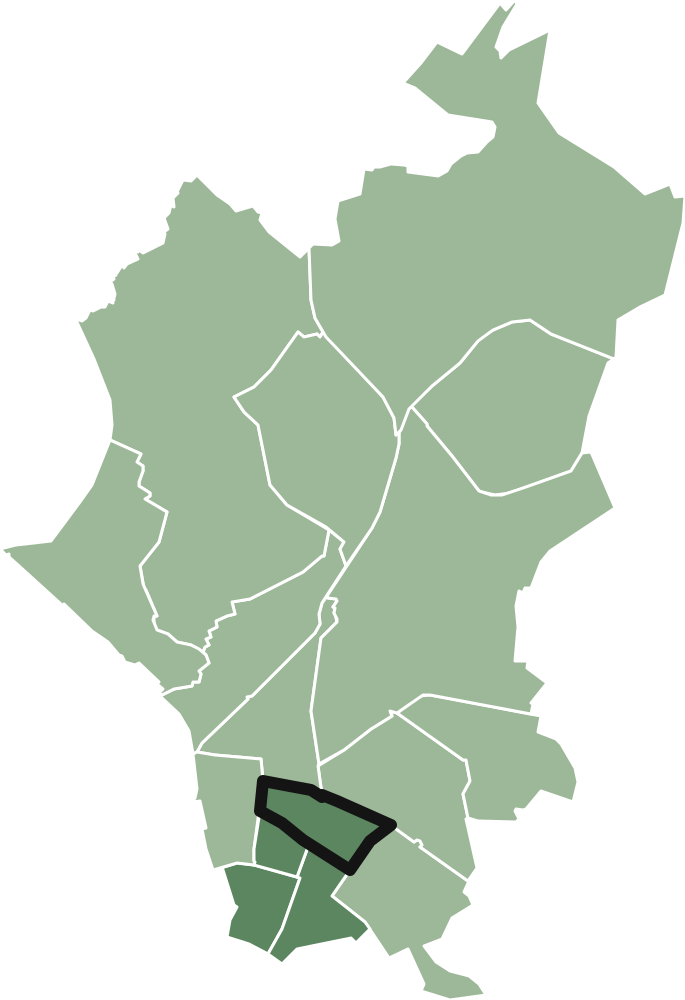
- 0 to 25
- 26 to 50
- 51 to 75
- 76 to 100
- Prenzlauer Berg Nord: thick outline
- no value
Noise and air
Traffic noise in Prenzlauer Berg Nord averages 49.7 dB. That is louder than in 59% of Berlin's Kieze.
Average noise level over day, evening and night (L_DEN), Strategic Noise Map 2022. Source: Berlin Environmental Atlas.
| Value | Prenzlauer Berg Nord | typical Kiez |
|---|---|---|
| High air pollution, % of sub-areas Sub-areas (planning areas) with high air pollution, Environmental Justice Atlas 2023 | 100 more polluted | 60¹ |
| Most common noise class, class Most common class of the noise map across the sub-areas | medium | medium |
More values
typical Kiez = median of the 143 Kieze
- High air pollution, % of sub-areas 100
Sub-areas (planning areas) with high air pollution, Environmental Justice Atlas 2023
typical Kiez: 60¹ more polluted
- Most common noise class, class medium
Most common class of the noise map across the sub-areas
typical Kiez: medium
¹ High air pollution: typical Kiez = median of the 87 Kieze with high air pollution.
| Value | Prenzlauer Berg Nord | Berlin median | Berlin, median |
|---|---|---|---|
| Traffic noise | 49.7 dB | 49.1 dB | 49.1 dB |
Green space and heat
Parks and green spaces cover 2.7% of area in Prenzlauer Berg Nord. That is less green than in 71% of Berlin's Kieze.
Public parks and green spaces. Source: Berlin green space register.
| Value | Prenzlauer Berg Nord | typical Kiez |
|---|---|---|
| Little green space near homes, % of sub-areas Sub-areas (planning areas) that the Berlin Senate rates as poorly supplied with green space near homes | 100 worse supplied | 50¹ |
| Green space provision according to the Senate, class Most common rating of how well people in the sub-areas are supplied with green space near their homes | poor | good |
More values
typical Kiez = median of the 143 Kieze
- Little green space near homes, % of sub-areas 100
Sub-areas (planning areas) that the Berlin Senate rates as poorly supplied with green space near homes
typical Kiez: 50¹ worse supplied
- Green space provision according to the Senate, class poor
Most common rating of how well people in the sub-areas are supplied with green space near their homes
typical Kiez: good
¹ Little green space near homes: typical Kiez = median of the 60 Kieze that have poorly supplied sub-areas.
| Value | Prenzlauer Berg Nord | Berlin median | Berlin, median |
|---|---|---|---|
| Parks and green spaces | 2.7% of area | 5.3% of area | 5.3% of area |
| Perceived temperature in the afternoon | 36.7 °C | 35.7 °C | 35.7 °C |
Housing and rent
Existing tenants in Prenzlauer Berg Nord pay 7.97 €/m² in net rent. That is more expensive than in 64% of Berlin's Kieze.
Net rent in existing rental contracts. Source: Census 2022.
| Value | Prenzlauer Berg Nord | typical Kiez |
|---|---|---|
| Old buildings, % of homes Homes in buildings built before 1949 | 80 | 35 |
| Rent protection areas (Milieuschutz), % of area Area in Milieuschutz zones, where renovations and the conversion of rentals into owned flats need approval | 73 | 23¹ |
More values
typical Kiez = median of the 143 Kieze
- Old buildings, % of homes 80
Homes in buildings built before 1949
typical Kiez: 35
- Rent protection areas (Milieuschutz), % of area 73
Area in Milieuschutz zones, where renovations and the conversion of rentals into owned flats need approval
typical Kiez: 23¹
¹ Rent protection areas (Milieuschutz): typical Kiez = median of the 64 Kieze with area in Milieuschutz zones.
| Value | Prenzlauer Berg Nord | Berlin median | Berlin, median |
|---|---|---|---|
| Rent in existing contracts | 7.97 €/m² | 7.62 €/m² | 7.62 €/m² |
Getting around
Prenzlauer Berg Nord has 16.9 stops per square kilometre. That is more than in 83% of Berlin's Kieze.
Stops for U-Bahn, S-Bahn, tram and bus. Source: OpenStreetMap.
| Value | Prenzlauer Berg Nord | typical Kiez |
|---|---|---|
| Stop within 400 m, % of residents Residents who live no more than 400 metres from the nearest stop | 100 closer | 98 |
| U-Bahn and S-Bahn stations | 1 | 1 |
More values
The number covers the whole area. Larger areas often have more.
typical Kiez = median of the 143 Kieze
- Stop within 400 m, % of residents 100
Residents who live no more than 400 metres from the nearest stop
typical Kiez: 98 closer
- U-Bahn and S-Bahn stations 1
typical Kiez: 1
| Value | Prenzlauer Berg Nord | Berlin median | Berlin, median |
|---|---|---|---|
| Public transport stops | 16.9 per km² | 12.0 per km² | 12.0 per km² |
Shopping, day care, culture
Prenzlauer Berg Nord has 16.4 food shops per 10,000 residents. That is more than in 90% of Berlin's Kieze.
Supermarkets, discounters and other food shops. Source: OpenStreetMap.
| Value | Prenzlauer Berg Nord | typical Kiez |
|---|---|---|
| Pharmacies | 2.1 | 1.6 |
| Day care centres (Kitas) Day care centres | 6.0 | 6.9 |
| Schools | 1.8 | 2.3 |
| Cultural venues Museums, theatres, cinemas, libraries, galleries, clubs and community arts centres | 1.8 | 1.5 |
More values
per 10,000 people
typical Kiez = median of the 143 Kieze
- Pharmacies 2.1
typical Kiez: 1.6
- Day care centres (Kitas) 6.0
Day care centres
typical Kiez: 6.9
- Schools 1.8
typical Kiez: 2.3
- Cultural venues 1.8
Museums, theatres, cinemas, libraries, galleries, clubs and community arts centres
typical Kiez: 1.5
| Value | Prenzlauer Berg Nord | Berlin median | Berlin, median |
|---|---|---|---|
| Food shops | 16.4 per 10,000 people | 7.9 per 10,000 people | 7.9 per 10,000 people |
People
Prenzlauer Berg Nord has 16,938 residents per square kilometre. That is more than in 90% of Berlin's Kieze.
Registered residents, as of the end of 2024. Source: Statistical Office Berlin-Brandenburg.
| Value | Prenzlauer Berg Nord | typical Kiez |
|---|---|---|
| Recorded crime, index, weighted cases per 100,000 people Frequency rate per planning region (Bezirksregion), not per address. The value relates recorded cases to registered residents and does not measure personal risk. Places with many tourists or commuters look worse as a result, and unreported crime is missing. The value is not a safety ranking. | 953 | 951 |
| Social situation, class Most common level of the sub-areas in the Senate's Social Urban Development Monitoring 2025 | medium | medium |
More values
typical Kiez = median of the 143 Kieze
- Recorded crime, index, weighted cases per 100,000 people 953
Frequency rate per planning region (Bezirksregion), not per address.
What does the value mean?
The value relates recorded cases to registered residents and does not measure personal risk. Places with many tourists or commuters look worse as a result, and unreported crime is missing. The value is not a safety ranking.
typical Kiez: 951
- Social situation, class medium
Most common level of the sub-areas in the Senate's Social Urban Development Monitoring 2025
typical Kiez: medium
| Value | Prenzlauer Berg Nord | Berlin median | Berlin, median |
|---|---|---|---|
| Population density | 16,938 people per km² | 6,084 people per km² | 6,084 people per km² |
Elections since 2016
In the 2025 Bundestag election, Die Linke came first in Prenzlauer Berg Nord with 28%. In all of Berlin it also came first, with 20%. Since 2017 the Greens have gained 6 percentage points here, and the CDU has lost 6.
Each small chart shows one party, all on the same scale. Results for single Kieze start in 2016, for the Bundestag in 2017.
| Party | 2017 | 2021 | 2025 |
|---|---|---|---|
| AfD | 9% (12%) | 9% (9%) | 11% (15%) |
| CDU | 16% (23%) | 11% (17%) | 10% (18%) |
| Die Linke | 27% (19%) | 19% (12%) | 28% (20%) |
| FDP | 6% (9%) | 4% (8%) | – |
| GRÜNE | 18% (13%) | 32% (22%) | 24% (17%) |
| SPD | 16% (18%) | 16% (22%) | 14% (15%) |
| Sonstige | 7% (5%) | 6% (6%) | – |
| BSW | – | – | 7% (7%) |
Neighbours and similar Kieze
“Compare” sets every chapter on this page against the chosen Kiez. The name opens its own page.
Borders
Kieze that share a border
Similar
Kieze with similar values in the five areas of the Kiez score
The Kiez score at a glance
Prenzlauer Berg Nord scores 56 out of 100 points and ranks 12 of 143 Kieze. Each row shows one area, more points are better. The ring is the Berlin median.
Culture and recorded crime do not count towards the Kiez score. Crime is therefore shown separately and without a rating.
| Area | Prenzlauer Berg Nord | Berlin median | Difference |
|---|---|---|---|
| Overall score | 56 | 41 | +15 |
| Quiet & air | 42 | 64 | −22 |
| Green & heat | 30 | 55 | −25 |
| Mobility | 39 | 26 | +13 |
| Local amenities | 68 | 53 | +15 |
| Tenant protection | 100 | 0 | +100 |
| Culture | 91 | 42 | +49 |
| Recorded crime | 45 | 45 | ±0 |
Frequently asked questions
›How loud is it in the Kiez Prenzlauer Berg Nord?
Moderately loud. The whole Kiez is in the noise class medium. This means traffic noise from roads, rail and aircraft, averaged over day, evening and night. The navigator.berlin Quiet & air score combines noise and air. There the Kiez gets 42 of 100 points, in the bottom quarter of the 143 Kieze. That is less than the average of the Kieze in its district. Source: Noise pollution 2023, as of January 2024.
›How up to date is the noise data for Prenzlauer Berg Nord?
The noise classes date from January 2024. The Senate has the noise map recalculated every five years, in line with the EU cycle.
›How well is the Kiez Prenzlauer Berg Nord supplied with green space?
Poor, according to the Senate. The whole Kiez is rated as poorly served with green space. The Senate measures how much public green space per person lies near homes. The navigator.berlin Green & heat score is a different measure. It combines green space and heat. There the Kiez gets 30 of 100 points, in the bottom quarter of the 143 Kieze. That is less than the average of the Kieze in its district. Source: Green space provision 2023, as of January 2024.
›How well is the Kiez Prenzlauer Berg Nord served by bus and train?
The stop network here is dense, typical of mixed inner-city areas. There are 16.9 stops per square kilometre. The Kiez has one S-Bahn station, 14 tram stops and 13 bus stops, but no U-Bahn station. In the navigator.berlin Mobility score, the Kiez gets 39 of 100 points, joint rank 21 of 143 Kieze. That is more than the average of the Kieze in its district. Source: Public transport stops (BVG + S-Bahn), as of May 2026.
›Does navigator.berlin rate residential areas as good or bad?
No. We show ratings from official data, such as the Mietspiegel residential area type, the social monitoring or the standard land value. These ratings describe a place; they do not judge it. We do not use labels such as “popular Kiez” or “good district”.
›How much tenant protection is there in Prenzlauer Berg Nord?
In the navigator.berlin Tenant protection score, the Kiez gets 100 of 100 points, joint rank 1 of 143 Kieze. That is more than the average of the Kieze in its district. The score measures how much of the area is under Milieuschutz. Milieuschutz is meant to protect tenants from displacement.
›How hot does the Kiez Prenzlauer Berg Nord get on hot days?
On hot days it gets warm here, but not extreme: the perceived temperature averages 36.7 degrees. The perceived temperature (PET) takes sun, wind and humidity into account. Source: Perceived temperature 2022, as of June 2024.